Authentic French Baguette Tradition
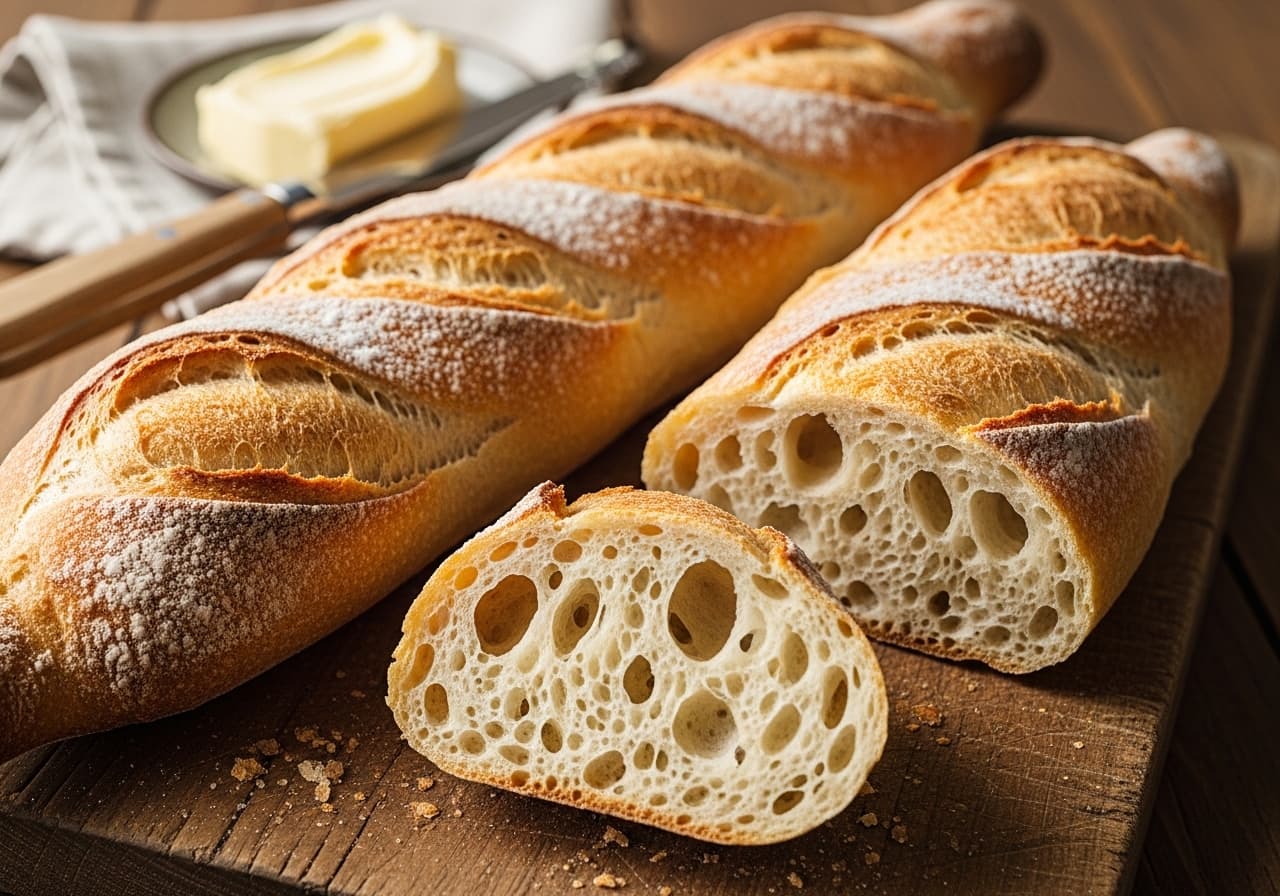
A true French Baguette Tradition is characterized by its crisp, golden crust, airy crumb with irregular holes, and simple yet profound flavor. This recipe adheres to traditional methods, yielding a quintessential loaf perfect for any meal, embodying the essence of French baking. The baguette is an iconic symbol of French culture, deeply ingrained in daily life. Its modern form emerged in the 19th century, with its precise definition ('Baguette de Tradition Française') being legally protected in 1993, mandating specific ingredients and methods to ensure its authentic character. It remains an indispensable part of French meals, from breakfast to dinner, often purchased daily from a local boulangerie.
Ingredients
- 500 g Strong Bread Flour (Type 55 or unbleached high-protein AP)
- 300 ml Cold Water (for autolyse)
- 50 ml Room Temperature Water
- 10 g Fine Sea Salt
- 2 g Instant Dry Yeast
Instructions
- 1
**Autolyse:** In a large bowl, combine the flour and 300ml cold water. Mix until no dry spots remain, forming a shaggy dough. Cover and let rest for 30 minutes to 1 hour at room temperature.
- 2
**Add Yeast & Salt:** Sprinkle the yeast over the remaining 50ml room temperature water in a small bowl and let it hydrate for 5 minutes. Add the salt to the autolysed dough, then pour in the yeast mixture. Mix by hand, squeezing and folding until the salt and yeast are fully incorporated and the dough feels cohesive (about 5-7 minutes).
- 3
**Bulk Fermentation (First Rise):** Cover the bowl and let the dough rest at room temperature for 1.5 to 2 hours. Perform a 'stretch and fold' every 30-45 minutes: gently pull a section of the dough up, stretch it, and fold it over itself. Rotate the bowl and repeat 3-4 times until all sides are folded. This builds strength.
- 4
**Divide & Pre-shape:** Gently turn the dough out onto a lightly floured surface. Avoid degassing too much. Divide the dough into 2 equal pieces. Gently pre-shape each piece into a loose rectangle or oval. Cover with a damp cloth and let rest for 20 minutes.
- 5
**Final Shaping:** Lightly flour your work surface. Take one pre-shaped dough piece. Flatten it gently into a rectangle. Fold the top edge down to the center and press to seal. Fold the bottom edge up to the center and press to seal. Then fold the entire dough in half lengthwise and seal the seam firmly with the heel of your hand. Gently roll the dough back and forth to lengthen it to about 15-16 inches, tapering the ends slightly. Repeat with the second piece.
- 6
**Final Proofing:** Place the shaped baguettes seam-side up in a floured couche (linen cloth) or on a floured baking sheet with parchment paper, creating folds between them to support their shape. Cover with another damp cloth or plastic wrap and proof at room temperature for 1 to 1.5 hours, or until they are puffy and spring back slowly when gently poked.
- 7
**Preheat Oven & Prepare for Steam:** About 30-45 minutes before baking, preheat your oven to 475°F (245°C) with a baking stone or steel inside. Place a cast-iron skillet or oven-safe pan on the bottom rack of the oven.
- 8
**Score & Bake:** Carefully transfer the proofed baguettes to a peel or parchment paper. With a sharp lame or razor blade, make 3-5 quick, diagonal cuts (about 1/2 inch deep) along the top of each baguette. Carefully slide the baguettes onto the hot baking stone. Immediately pour about 1 cup of hot water into the preheated skillet/pan (be careful of steam!) and quickly close the oven door.
- 9
**Bake:** Bake for 20-25 minutes, or until deep golden brown and the crust is crisp. For an extra crisp crust, open the oven door for the last 5 minutes to release any remaining steam. Let cool completely on a wire rack before slicing and serving.
Chef's Tips
- •Storage: For optimal crispness, baguettes are best consumed the day they are baked. Store at room temperature, cut-side down, or in a paper bag. Do not refrigerate, as it will make the bread stale faster. For longer storage, freeze tightly wrapped in plastic wrap and foil; reheat from frozen in a hot oven.
- •Flour Substitution: While Type 55 flour is ideal, a high-quality unbleached all-purpose flour with 11-12% protein content can be used. For an even more complex flavor, consider replacing a small portion of the flour and water with an active sourdough starter.
- •The 'Ear': To achieve the signature 'ear' (the raised flap of crust along the score mark), ensure your blade is very sharp and make swift, confident cuts at a shallow 30-degree angle. Good steam in the oven is also crucial for crust development.
- •Fun Fact: The distinct crackling sound of a freshly baked baguette as it cools is often referred to as the 'singing' of the bread. This delightful sound is a sign of a perfectly baked loaf with a thin, brittle crust contracting as it cools.
Recommended Equipment
As an Amazon Associate, we earn from qualifying purchases.
Reviews
Sign in to leave a review.
No reviews yet. Be the first!
More Breads & Pastries Recipes
Classic Boiled and Baked Bagels
Classic French Blinis
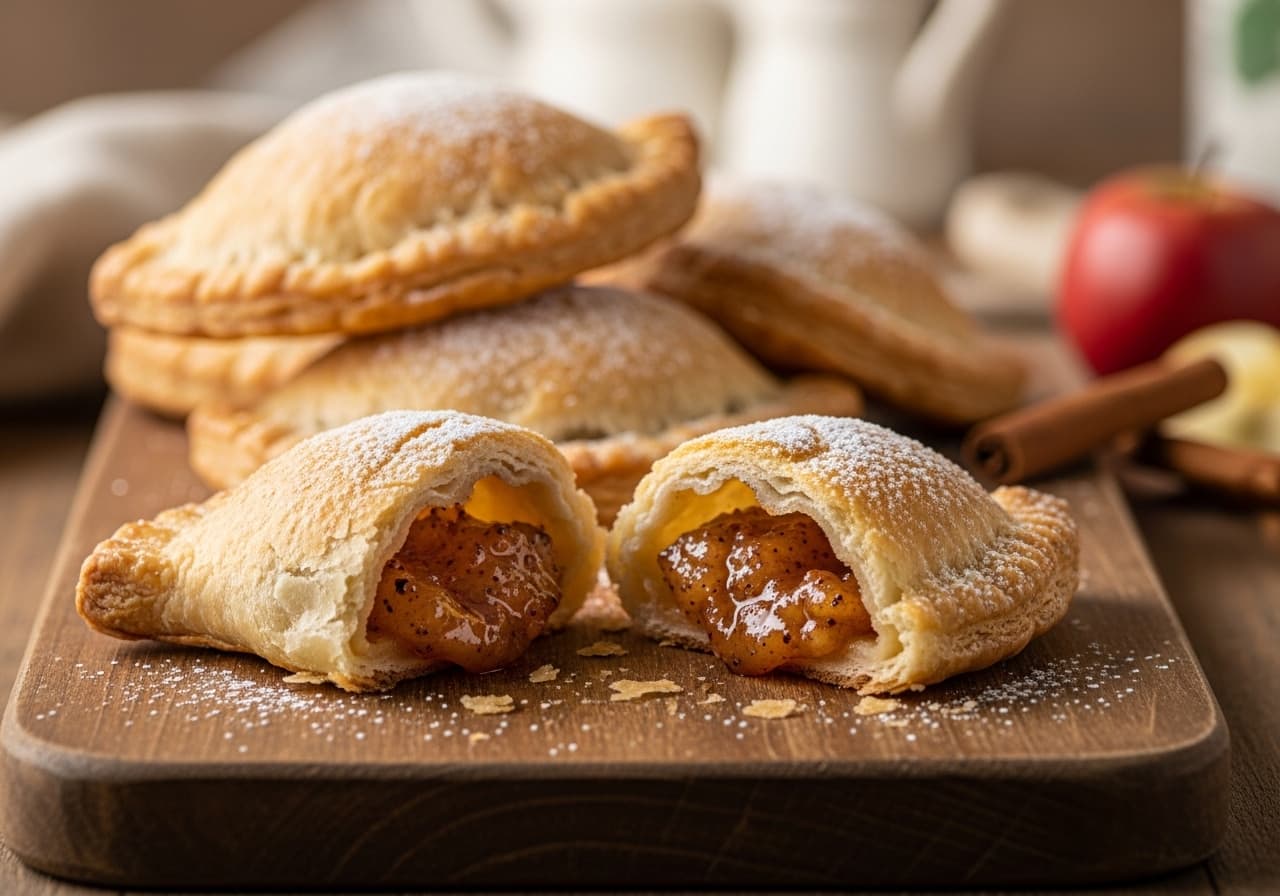
French Apple Turnovers (Chaussons aux Pommes)