Classic Hollandaise Sauce
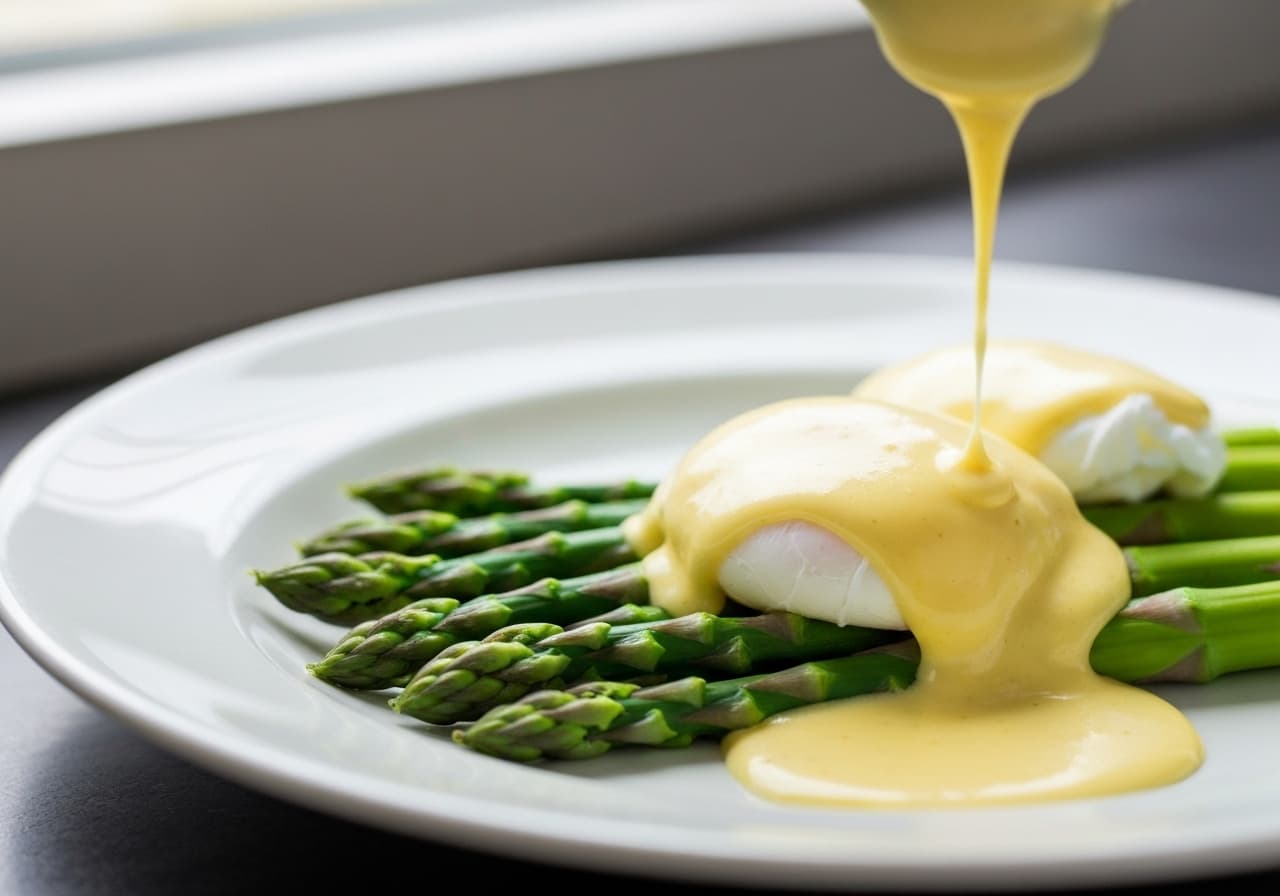
A rich, creamy, and tangy emulsion of egg yolks, melted butter, and lemon juice, Hollandaise sauce is a cornerstone of French cuisine. It's renowned for its silky texture and vibrant flavor, perfect for elevating dishes like Eggs Benedict, asparagus, or poached fish. Hollandaise sauce, despite its name suggesting Dutch origin, is firmly established as one of the five "mother sauces" of classical French cuisine, as codified by Auguste Escoffier. While its exact origins are debated, it became prominent in French culinary tradition, especially after the French Revolution, and is a testament to the art of emulsification.
Ingredients
- 3 Large egg yolks
- 1 cup Unsalted butter, melted and kept warm
- 2 tablespoons Fresh lemon juice
- 1 tablespoon Water (optional, for thinning)
- 0.25 teaspoon Salt
- 1 pinch White pepper (optional)
- 1 pinch Cayenne pepper (optional)
Instructions
- 1
Prepare a double boiler: Fill a medium saucepan with about an inch (2-3 cm) of water and bring it to a simmer over medium heat. Ensure the top bowl (which should fit snugly over the saucepan without touching the water) is clean and dry.
- 2
In the top bowl of the double boiler, combine the egg yolks, lemon juice, and salt. Whisk vigorously until the mixture is light in color and slightly thickened, about 1-2 minutes.
- 3
Place the bowl over the simmering water. Continue whisking constantly and energetically, ensuring the egg mixture doesn't scramble. The mixture will thicken and become pale and creamy, reaching a ribbon consistency. This usually takes 5-8 minutes.
- 4
Carefully remove the bowl from the heat. Slowly drizzle in the warm melted butter, a few drops at a time initially, while continuously whisking. As the emulsion forms, you can add the butter in a thin, steady stream.
- 5
Continue whisking until all the butter is incorporated and the sauce is smooth, thick, and glossy.
- 6
Stir in the white pepper and cayenne pepper (if using). Taste and adjust seasoning with more salt or lemon juice if desired.
- 7
If the sauce is too thick, whisk in a tablespoon of warm water, a few drops at a time, until the desired consistency is reached.
- 8
Serve immediately or keep warm over a very low heat (or in a thermos) for a short period. Do not reheat Hollandaise sauce once it has cooled significantly.
Chef's Tips
- •Use fresh, high-quality ingredients, especially the butter and lemon juice, for the best flavor and a stable emulsion.
- •Maintain a gentle, consistent heat when whisking the egg yolks over the double boiler to prevent scrambling. The water should simmer, not boil vigorously.
- •Add the melted butter very slowly at first to ensure a stable emulsion. If the sauce breaks, you can try to rescue it by whisking a teaspoon of hot water or another egg yolk into a clean bowl, then slowly whisking in the broken sauce.
- •Serve Hollandaise immediately as it tends to separate upon cooling. If keeping warm, do so gently and for a short duration, stirring occasionally.
Recommended Equipment
As an Amazon Associate, we earn from qualifying purchases.
Reviews
Sign in to leave a review.
No reviews yet. Be the first!