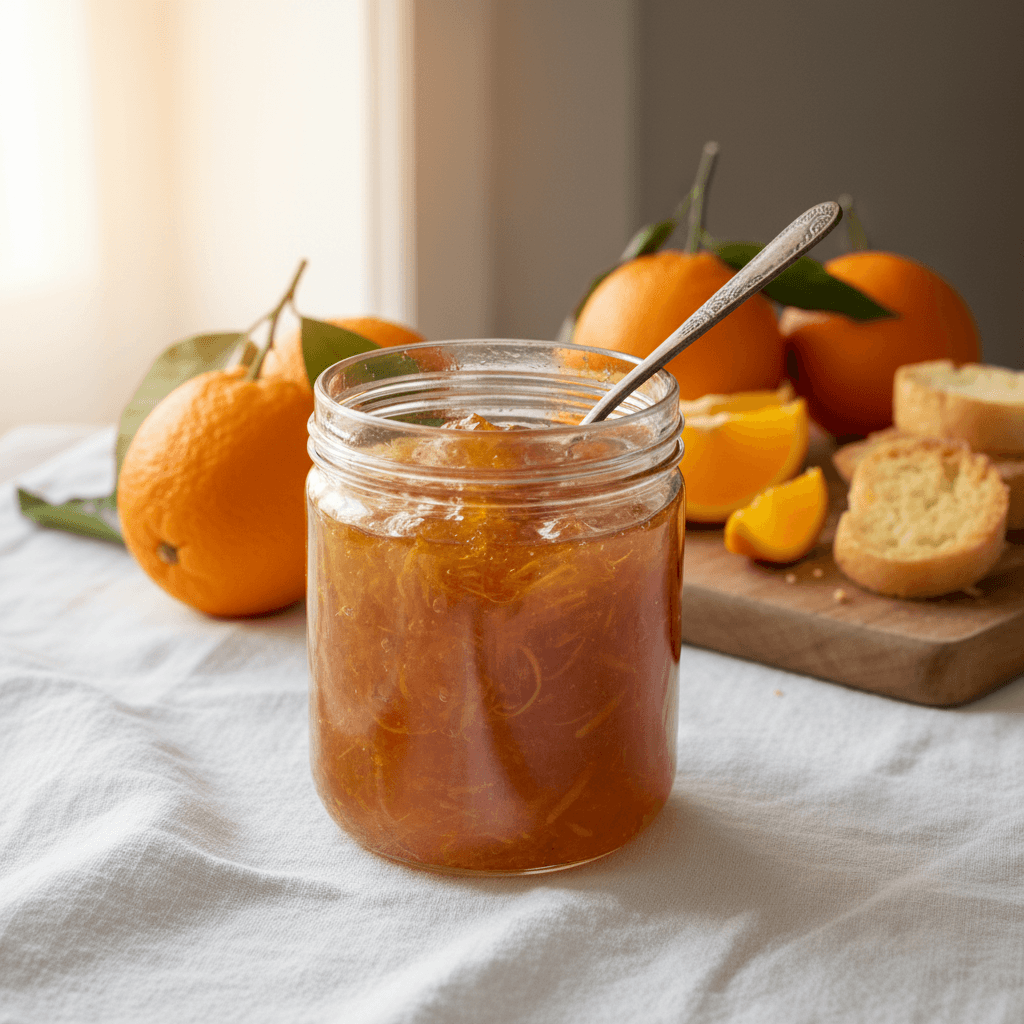
Classic French Orange Marmalade
A traditional French recipe for vibrant orange marmalade, featuring tender, translucent peel suspended in a sweet, tangy preserve. This homemade delight is perfect for spreading on toast, brioche, or croissants, bringing an authentic taste of French breakfast to your table. Marmalade, while often associated with British breakfast traditions, has a rich history of fruit preservation across Europe, including France. 'Marmelade d'orange' in France typically refers to a clear, jelly-like preserve with finely sliced orange peel, often enjoyed during the cooler months as a bright, warming condiment.
Ingredients
- 1.2 kg Seville Oranges (or bitter oranges)
- 1.5 kg Granulated Sugar
- 2.5 liters Water
- 2 tablespoons Fresh Lemon Juice
Instructions
- 1
Thoroughly wash and scrub the oranges. Slice them in half and squeeze out all the juice, reserving any pips and membranes. Tie the pips and membranes in a small muslin bag.
- 2
Finely slice the orange peels into very thin strips (julienne). In a large, non-reactive pot, combine the sliced peel, reserved juice, the muslin bag with pips, and the water.
- 3
Bring the mixture to a boil, then reduce the heat and simmer gently for 1.5 to 2 hours, or until the orange peel is very tender and translucent. Remove and discard the muslin bag.
- 4
Add the granulated sugar to the pot and stir over low heat until it is completely dissolved. Ensure no sugar crystals remain on the sides of the pot.
- 5
Increase the heat to medium-high and bring the marmalade mixture to a rapid, rolling boil. Boil vigorously, stirring occasionally to prevent sticking, until it reaches its setting point.
- 6
To test for the setting point, place a small plate in the freezer before you begin cooking. When you think the marmalade is ready, spoon a teaspoon onto the cold plate, let it cool for a minute, then push it gently with your finger. If it wrinkles, it's set (it should also reach 104-105°C or 220-221°F on a candy thermometer).
- 7
Once the setting point is reached, remove the pot from the heat. Skim off any foam from the surface using a large spoon. Stir in the fresh lemon juice.
- 8
Carefully ladle the hot marmalade into sterilized jars, leaving about 1/4 inch (0.5 cm) headspace. Seal immediately with sterilized lids.
- 9
Allow the jars to cool completely at room temperature. The marmalade will continue to thicken as it cools. Store in a cool, dark place.
Chef's Tips
- •Store sealed jars of marmalade in a cool, dark place for up to 1-2 years. Once opened, refrigerate and consume within 2-3 months for best quality.
- •While Seville oranges are traditional for their high pectin and characteristic bitter notes, you can substitute with a mix of sweet oranges and additional lemons (for pectin) if Seville oranges are unavailable.
- •For an extra layer of flavor and aroma, consider adding a vanilla bean pod or a few star anise during the simmering process, removing them before adding sugar.
- •Fun Fact: The word 'marmalade' is believed to derive from the Portuguese 'marmelada,' referring to quince jam, highlighting its ancient roots as a method for preserving various fruits, long before oranges became its primary fruit.
Recommended Equipment
As an Amazon Associate, we earn from qualifying purchases.
Reviews
Sign in to leave a review.
No reviews yet. Be the first!