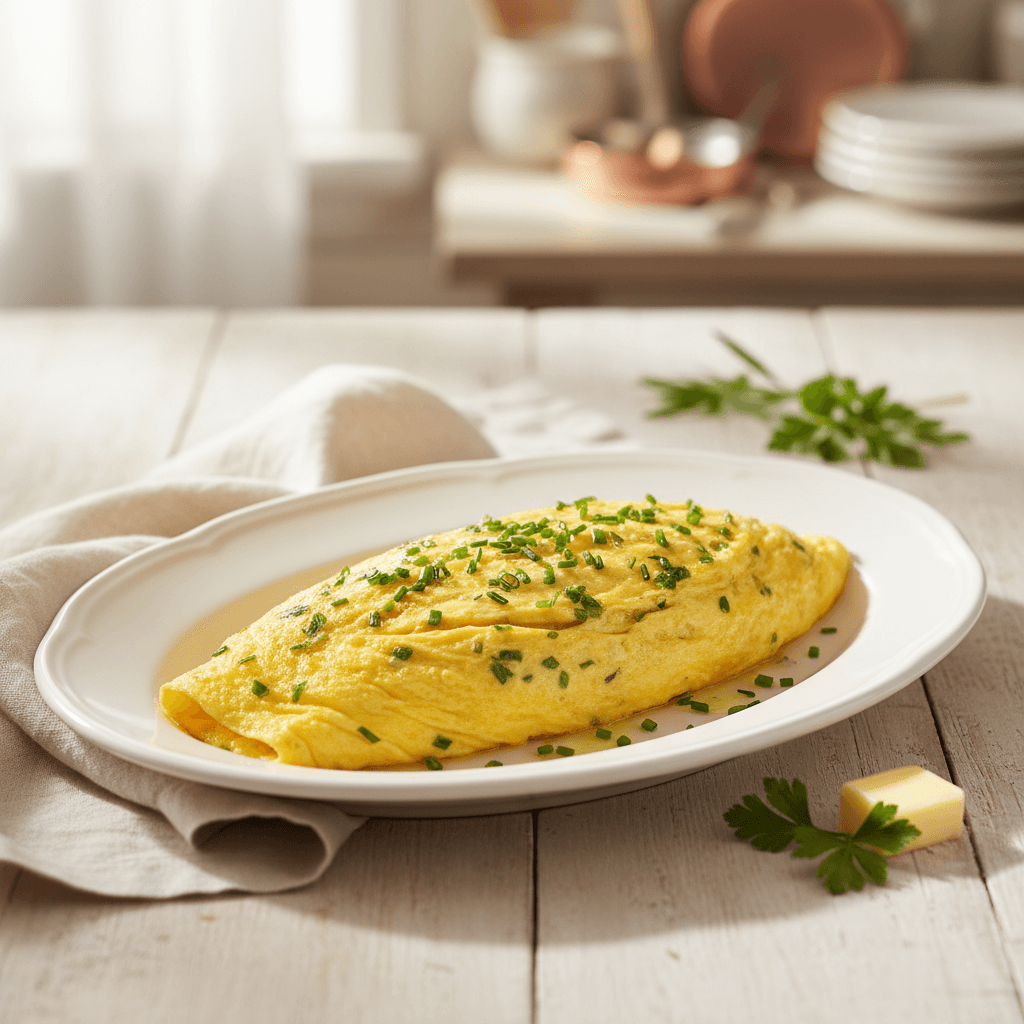
Omelette with Fine Herbs
A quintessential French omelette, celebrated for its delicate texture and vibrant infusion of fresh, aromatic herbs. This simple yet elegant dish showcases the beauty of fresh ingredients transformed into a quick, comforting, and sophisticated meal. The omelette is a cornerstone of French cuisine, celebrated for its delicate texture and quick preparation. "Aux fines herbes" specifically highlights the French culinary tradition of using a classic blend of fresh, aromatic herbs—traditionally parsley, chives, tarragon, and chervil—to elevate simple ingredients. It embodies a philosophy where quality ingredients shine, turning humble eggs into an exquisite meal and a testament to French culinary finesse.
Ingredients
- 4 large Large Eggs
- 1 tablespoon Unsalted Butter
- 1 tablespoon Fresh Parsley, finely chopped
- 1 tablespoon Fresh Chives, finely chopped
- 1 teaspoon Fresh Tarragon, finely chopped
- 1 teaspoon Fresh Chervil, finely chopped
- 0.25 teaspoon Salt
- 0.125 teaspoon Black Pepper
- 1 tablespoon Heavy Cream or Milk (optional, for softer texture)
Instructions
- 1
Crack the eggs into a medium bowl. Add salt, pepper, and the optional cream or milk. Whisk vigorously with a fork until the yolks and whites are fully combined and slightly frothy, but avoid incorporating too much air.
- 2
Gently fold in the finely chopped fresh herbs into the egg mixture.
- 3
Heat a non-stick skillet (8-10 inch) over medium-high heat. Add half of the butter and swirl to coat the pan as it melts and just begins to foam.
- 4
Pour half of the egg mixture into the hot skillet. Let it cook undisturbed for about 10-15 seconds until the edges just begin to set.
- 5
Using a heat-proof rubber spatula, gently push the cooked edges towards the center while tilting the pan to allow the uncooked egg to flow underneath. Repeat this motion around the pan until most of the egg is softly set but still moist and creamy on top.
- 6
Once the omelette is mostly set but still glistening and slightly runny in the middle, gently fold one-third of the omelette over the center, then fold the other third over to create a neat, elongated oval shape.
- 7
Slide the omelette directly onto a warm plate. It should be pale yellow on the outside and moist inside.
- 8
Repeat steps 3-7 for the second omelette. Serve immediately, perhaps with a sprinkle of extra herbs.
Chef's Tips
- •Storage & Reheating: Omelettes are best enjoyed fresh. Leftovers can be stored in an airtight container in the refrigerator for up to 1 day, but the texture will change. Reheat gently in a non-stick pan over low heat.
- •Herb Substitutions: While the classic 'fines herbes' blend is parsley, chives, tarragon, and chervil, a mix of just parsley and chives is also perfectly traditional and delicious if the others are hard to find. You can experiment with other soft herbs like dill or basil, but they will alter the classic flavor profile.
- •Achieving Perfection: The key to a truly great French omelette is a hot pan, quick cooking, and not over-mixing the eggs before cooking. It should be tender, moist, and slightly creamy inside, never browned.
- •Fun Fact: The term "omelette" is believed to have evolved from "alumelle" (a thin blade) or "amelette" (thin plate), referring to the dish's flat, thin shape when cooked, long before the modern folded technique became popular.
Recommended Equipment
As an Amazon Associate, we earn from qualifying purchases.
Reviews
Sign in to leave a review.
No reviews yet. Be the first!