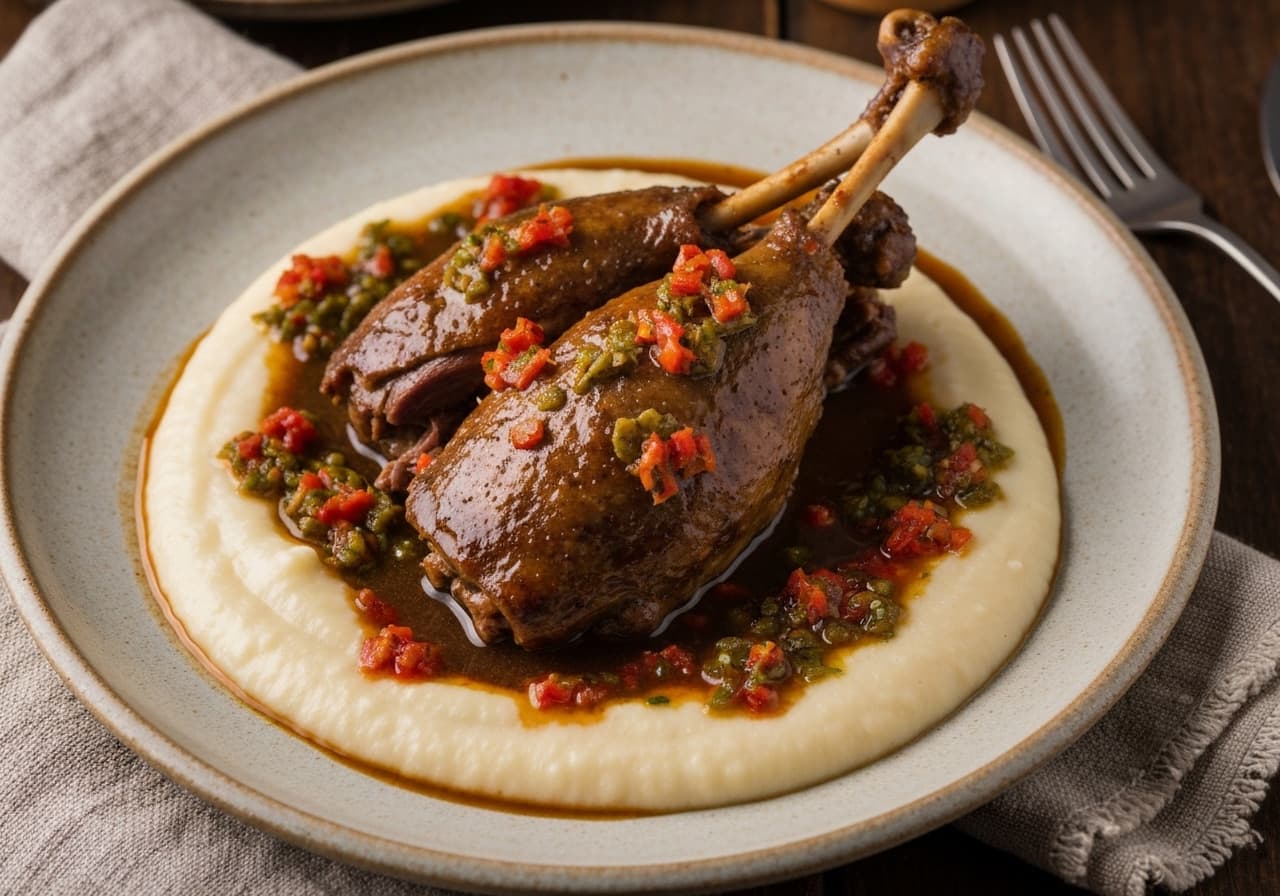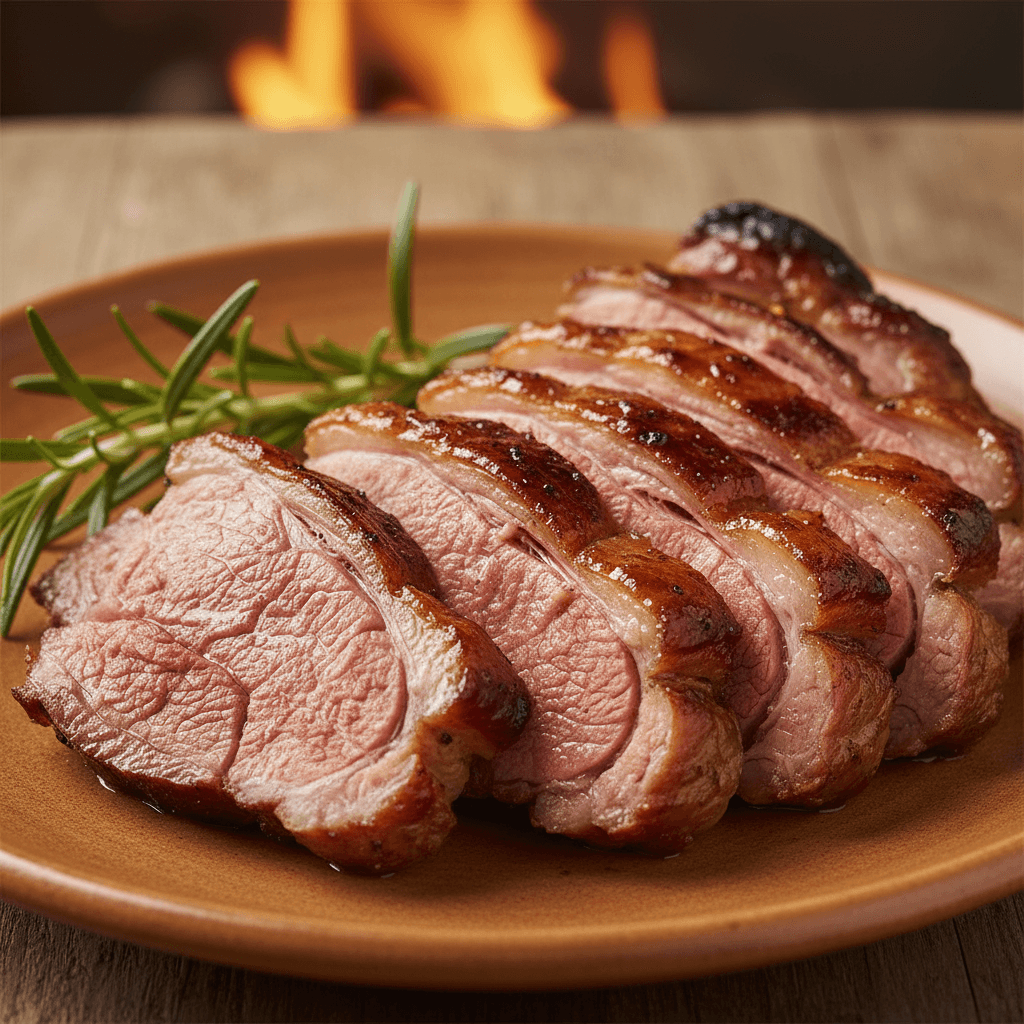
Spit-Roasted Lamb (Agneau à la Broche)
Agneau à la broche is a quintessential French dish, often gracing festive gatherings and outdoor celebrations. This traditional method involves slowly roasting a whole lamb or a large cut on a rotisserie spit over an open flame or indirect heat. The result is exceptionally tender, succulent meat with a perfectly crispy, golden-brown skin, embodying a communal and deeply flavorful culinary experience.
Ingredients
- 4.5 kg Whole Lamb Leg or Shoulder
- 0.5 cup Olive Oil
- 10 cloves Garlic Cloves
- 0.25 cup Fresh Rosemary
- 0.25 cup Fresh Thyme
- 3 tbsp Sea Salt
- 1 tbsp Freshly Ground Black Pepper
- 2 unit Lemons
- 1 cup Dry White Wine (optional, for basting)
- 1 cup Water (for basting)
Instructions
- 1
Prepare the Lamb: Trim any excess hard fat from the lamb, leaving a thin layer for flavor and moisture. Score the skin in a crosshatch pattern without cutting into the meat deeply.
- 2
Create the Aromatic Rub: Mince the garlic cloves finely. In a small bowl, combine the olive oil, minced garlic, chopped fresh rosemary, chopped fresh thyme, sea salt, and freshly ground black pepper.
- 3
Marinate the Lamb: Generously rub the entire surface of the lamb with the aromatic mixture, ensuring it penetrates the scored areas. Cover the lamb and refrigerate for at least 4 hours, or preferably overnight, to allow flavors to meld.
- 4
Skewer the Lamb: Securely thread the marinated lamb onto the rotisserie spit. Use the rotisserie forks or butchers twine to ensure the lamb is tightly bound and perfectly balanced on the spit for even rotation.
- 5
Set Up the Rotisserie: Prepare your rotisserie unit, whether it's over charcoal, gas, or an open fire. Position the lamb over indirect medium-low heat. If using charcoal, place coals to the sides of the lamb, not directly underneath.
- 6
Begin Roasting and Basting: Start the rotisserie motor. In a bowl, combine the juice of one lemon with the dry white wine (if using) and water for a basting liquid. Baste the lamb every 30-45 minutes to keep it moist and promote a crispy skin.
- 7
Monitor Temperature and Doneness: Continue roasting for 3-5 hours, depending on the size of the lamb and heat intensity. Use a meat thermometer to check the internal temperature in the thickest part of the meat (avoiding bone). For medium-rare, aim for 60-65°C (140-150°F); for medium, 65-70°C (150-160°F).
- 8
Rest the Lamb: Once the desired temperature is reached, carefully remove the lamb from the spit. Transfer it to a large carving board, tent loosely with aluminum foil, and let it rest for 20-30 minutes. This allows the juices to redistribute, ensuring a tender and moist result.
- 9
Carve and Serve: Carve the lamb against the grain into slices or chunks, depending on the cut. Serve immediately with pan juices, if collected, and the remaining lemon cut into wedges.
Chef's Tips
- •For enhanced flavor, use hardwood charcoal or add wood chips (like oak or cherry) to your heat source for a subtle smoky aroma.
- •Ensuring the lamb is perfectly balanced on the spit is crucial for even cooking; an unbalanced spit can cause uneven browning and cooking.
- •A drip pan placed underneath the lamb will catch flavorful juices for gravy and help prevent flare-ups, especially with charcoal.
- •Don't skip the resting period! It is essential for the meat to reabsorb its juices, resulting in a much more tender and flavorful lamb.
Recommended Equipment
As an Amazon Associate, we earn from qualifying purchases.
Reviews
Sign in to leave a review.
No reviews yet. Be the first!
More Main Courses - Meat Recipes
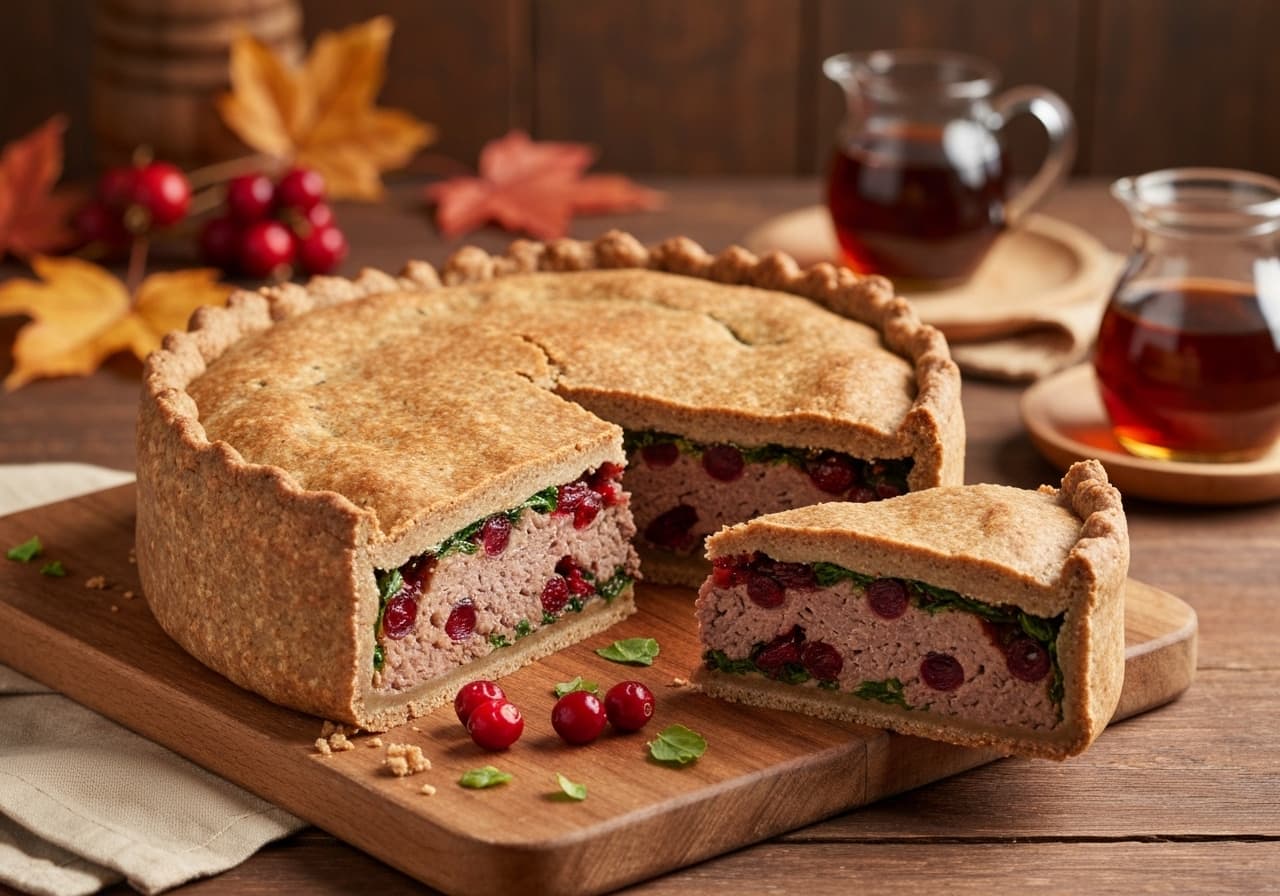
Bison and Cranberry Spinach Pâté with Buckwheat Crust
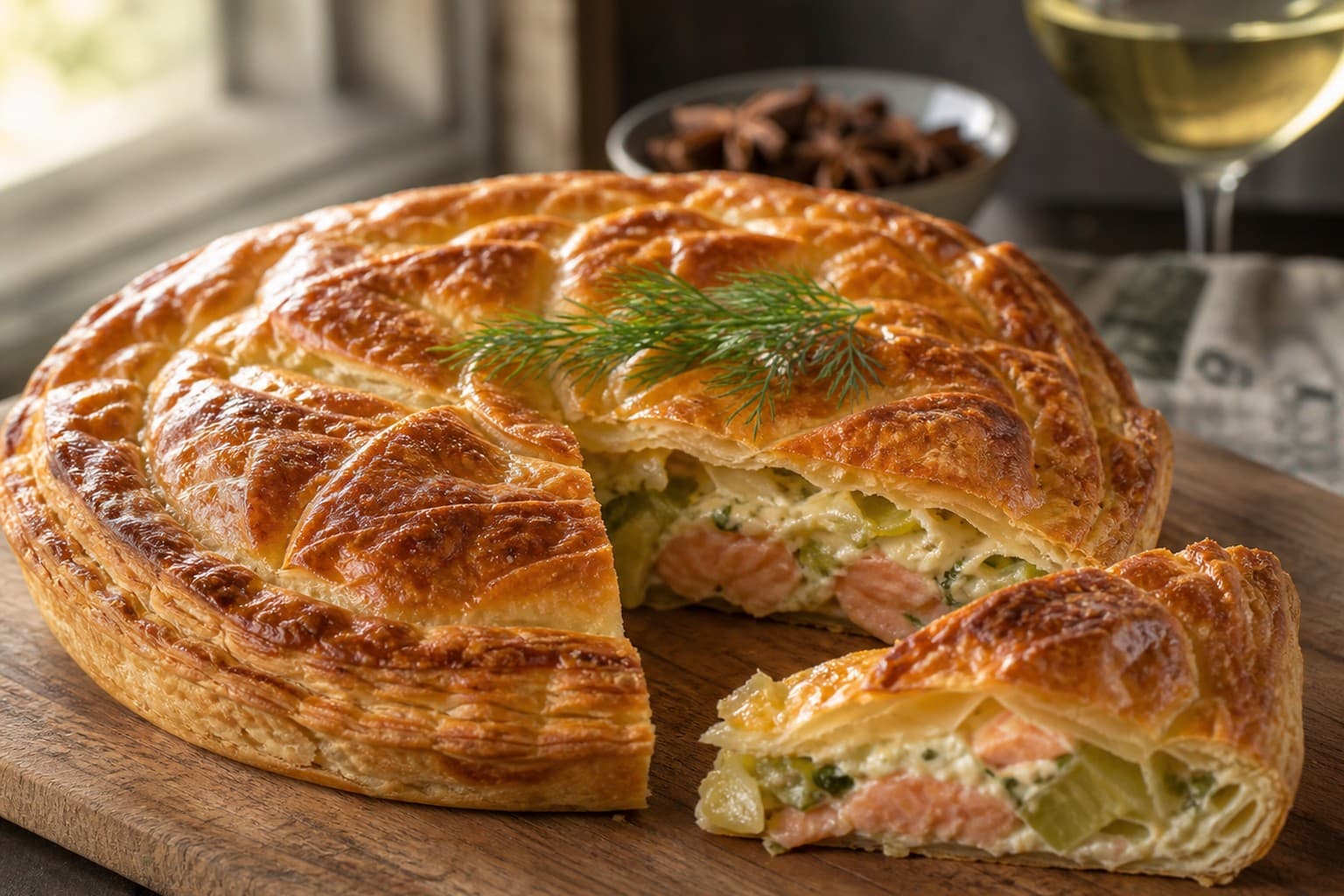
Smoked Salmon, Leek, and Aniseed Cream Pie
Calamansi and Ginger Fish Escabeche with Green Papaya Achara