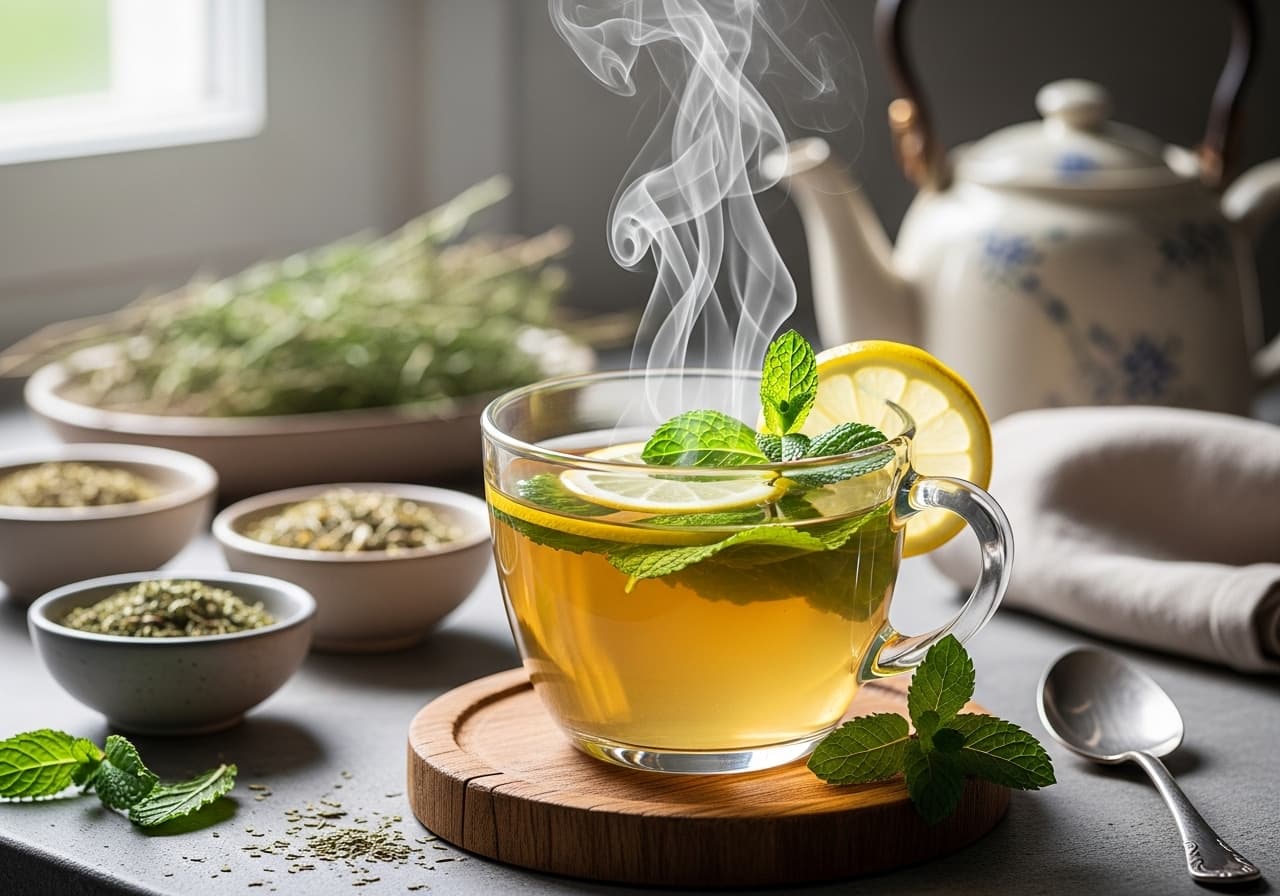
Herbal Infusion (Tisane)
A tisane, often simply called herbal tea, is a fragrant beverage made by infusing herbs, spices, or other plant material in hot water. Unlike true teas, tisanes are naturally caffeine-free and cherished for their therapeutic properties and soothing flavors. In France, tisanes hold a venerable place in daily life, traditionally consumed for their medicinal benefits and as comforting evening drinks. From simple chamomile for relaxation to complex blends for digestion, they embody a holistic approach to well-being deeply rooted in French herbalism and pharmacy traditions, often enjoyed as a gentle ritual.
Ingredients
- 2 cups Water
- 2 tablespoons (dried) or 1/4 cup (fresh) Fresh or Dried Herbs (e.g., chamomile, mint, verbena, linden, thyme)
- 1 to 2 teaspoons per serving Optional: Honey or Maple Syrup
- 1 per serving Optional: Lemon Slice
Instructions
- 1
Choose your preferred fresh or dried herbs for the tisane. Ensure they are clean and free from impurities.
- 2
If using fresh herbs, gently bruise them to release their aromatic oils. If using dried herbs, measure them out.
- 3
Bring 2 cups of fresh, filtered water to a rolling boil in a small saucepan or kettle.
- 4
Place the herbs into a heatproof mug, teapot, or a tea infuser.
- 5
Pour the hot water directly over the herbs, ensuring they are fully submerged.
- 6
Cover the mug or teapot to trap the volatile oils and allow the herbs to steep for 5-10 minutes, depending on the desired strength.
- 7
Strain the tisane using a fine-mesh sieve or remove the tea infuser, discarding the spent herbs.
- 8
Taste the tisane and, if desired, sweeten with honey or maple syrup and add a slice of lemon.
- 9
Serve hot and enjoy immediately.
Chef's Tips
- •Storage: Tisanes are best enjoyed fresh. While you can refrigerate leftover unsweetened tisane for up to 24 hours, reheating may diminish some of its delicate flavors and aromas.
- •Substitutions: Experiment with various herbs like lavender for relaxation, ginger for digestion, or rose petals for a floral note. Blending different herbs can create unique flavor profiles and synergistic effects.
- •Fun Fact: The word 'tisane' derives from the Greek word 'ptisane,' referring to a drink made from barley, highlighting its ancient roots as a medicinal beverage.
- •Enhancements: For a richer flavor, consider using filtered water. A pinch of cinnamon or a few cloves can also add warmth and complexity to certain herbal blends.
Recommended Equipment
As an Amazon Associate, we earn from qualifying purchases.
Reviews
Sign in to leave a review.
No reviews yet. Be the first!