Classic Ciabatta Bread
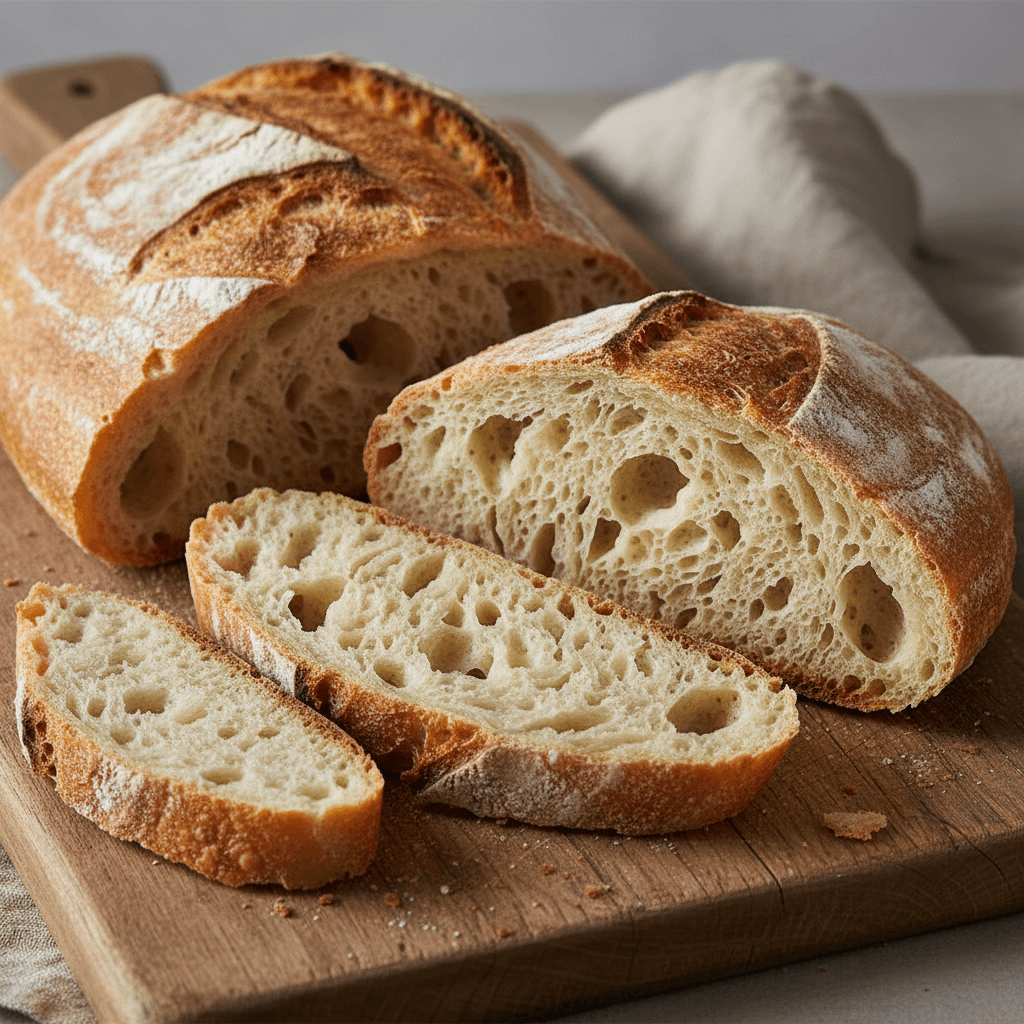
Ciabatta, meaning "slipper" in Italian, is a rustic white bread characterized by an elongated, broad, and flat shape, with a porous, open crumb and a crisp crust. Originating in Italy in 1982, it quickly gained popularity for its airy texture, making it perfect for sandwiches, bruschetta, or simply dipping in olive oil. This recipe focuses on developing its signature texture through a long fermentation process and high hydration.
Ingredients
- 120 grams Bread Flour(for the poolish)
- 120 ml Water(for the poolish, lukewarm)
- 0.5 teaspoon Instant Yeast(for the poolish)
- 400 grams Bread Flour(for the main dough)
- 300 ml Water(for the main dough, lukewarm)
- 1 teaspoon Instant Yeast(for the main dough)
- 10 grams Fine Sea Salt
- 1 tablespoon Olive Oil(plus more for greasing)
- 2 tablespoons Semolina Flour(for dusting)
Instructions
- 1
**Day 1: Prepare the Poolish.** In a medium bowl, combine 120g bread flour, 120ml lukewarm water, and 0.5 tsp instant yeast. Mix until well combined and no dry spots remain. Cover with plastic wrap and let it sit at room temperature (around 20-22°C / 68-72°F) for 12-16 hours, or until bubbly and slightly collapsed in the center.
- 2
**Day 2: Mix the Main Dough.** In a large bowl, combine 400g bread flour, 300ml lukewarm water, 1 tsp instant yeast, and the entire poolish. Mix with a wooden spoon or your hands until a shaggy dough forms. Let it rest, covered, for 15 minutes.
- 3
Add 10g salt and 1 tablespoon olive oil to the dough. Mix thoroughly for about 5-7 minutes until the salt is incorporated and the dough starts to develop some elasticity. It will be very sticky.
- 4
Lightly oil a clean large bowl. Transfer the sticky dough to the bowl. Perform the first 'stretch and fold': gently stretch a portion of the dough up and fold it over onto itself. Rotate the bowl and repeat this 3-4 more times, until all sides have been folded. Cover and let rest for 30 minutes.
- 5
Repeat the 'stretch and fold' process every 30 minutes for a total of 3-4 times. After the last fold, let the dough ferment, covered, at room temperature for 1 to 1.5 hours, or until it has noticeably increased in volume and is very bubbly.
- 6
Preheat your oven to 230°C (450°F) with a baking stone or steel inside. Place a broiler pan or cast-iron skillet on the bottom rack of the oven for steam. Lightly flour your work surface generously with semolina flour.
- 7
Gently turn the dough out onto the floured surface, trying not to deflate it. Stretch it into a rough rectangle. Using a bench scraper, gently divide the dough into 2-4 pieces. Gently lift each piece and place it onto a piece of parchment paper dusted with semolina flour.
- 8
Carefully transfer the ciabatta loaves on their parchment paper to the preheated baking stone/steel. Pour about 1 cup of hot water into the broiler pan to create steam. Bake for 20-25 minutes, or until golden brown and crusty. Let cool completely on a wire rack before slicing.
- 9
For extra crispy crust, you can turn off the oven, crack the door slightly, and leave the ciabatta inside for another 5-10 minutes after baking.
Chef's Tips
- •Don't be afraid of the sticky dough; ciabatta's high hydration is key to its open crumb. Use plenty of semolina flour on your work surface and hands when handling the dough.
- •Creating steam in the oven is crucial for a crisp crust. Besides the water in the pan, you can also spray the oven walls with water a few times during the first 10 minutes of baking.
- •Resist the urge to knead vigorously. Ciabatta dough is developed through gentle folds and long fermentation, which preserves the delicate air pockets.
Recommended Equipment
As an Amazon Associate, we earn from qualifying purchases.
Reviews
Sign in to leave a review.
No reviews yet. Be the first!
More Breads & Pastries Recipes
Classic Boiled and Baked Bagels
Authentic French Baguette Tradition
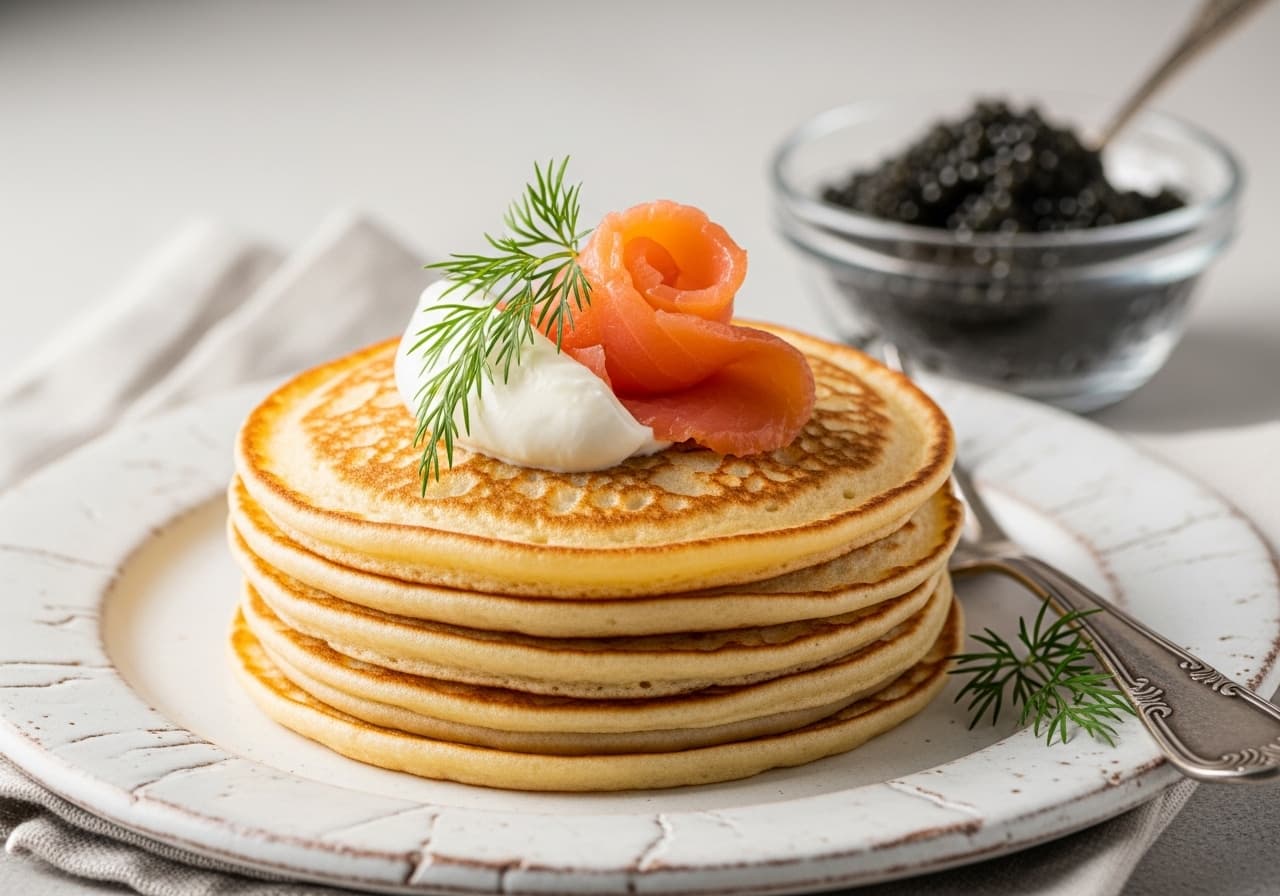
Classic French Blinis