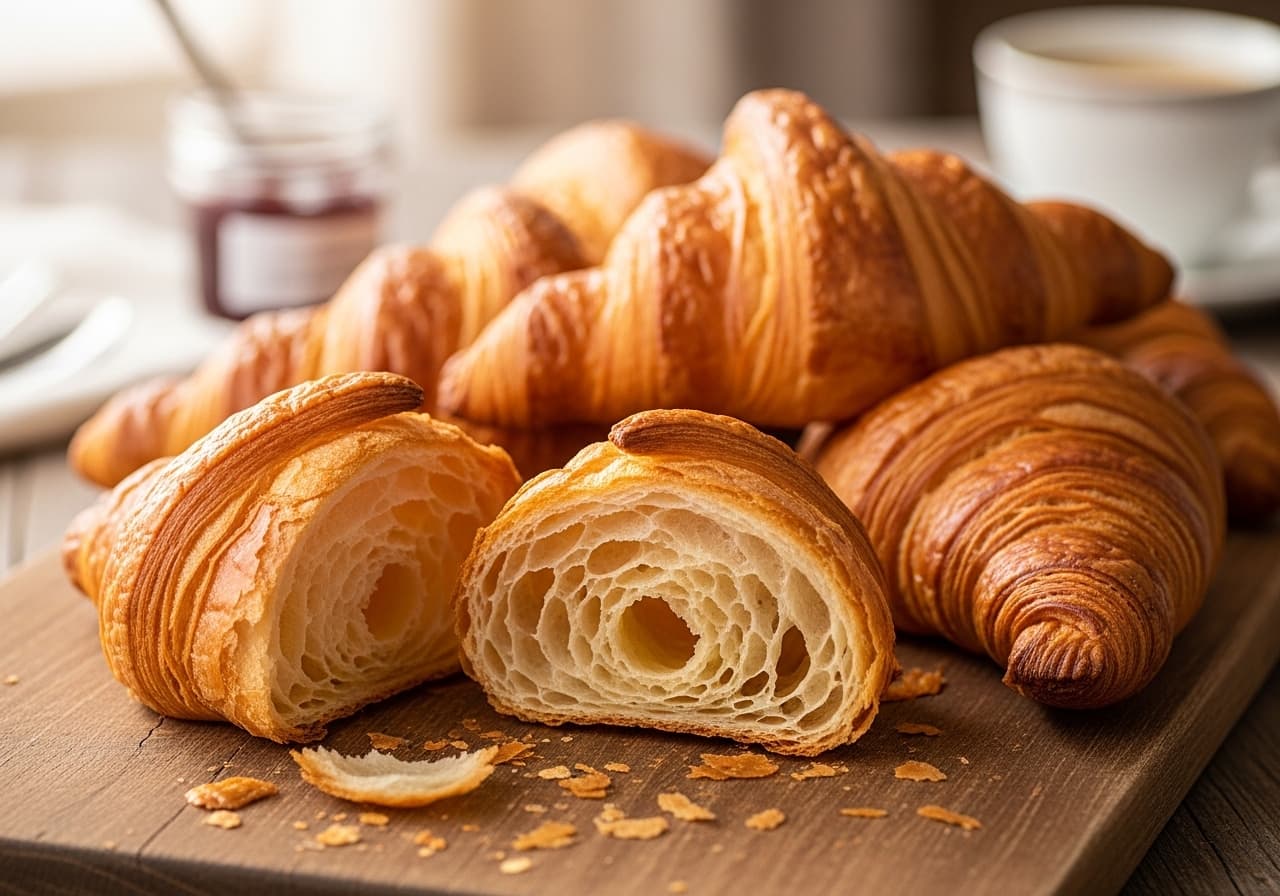
Classic French Croissants
Indulge in the quintessential French pastry with this authoritative recipe for classic croissants. Characterized by their distinct crescent shape, crisp, flaky exterior, and tender, buttery interior, these viennoiseries are a labor of love that rewards with unparalleled taste and texture. Originating from Austrian kipferl, the croissant was popularized in France and evolved into the iconic flaky pastry we know today. It became a staple of French boulangeries and pâtisseries, embodying the elegance and rich culinary tradition of French breakfast and snack culture. While its roots are Austrian, France refined the lamination technique, making the croissant a symbol of Parisian breakfast.
Ingredients
- 500 g All-purpose flour
- 60 g Granulated sugar
- 10 g Fine sea salt
- 10 g Instant dry yeast
- 150 ml Cold water
- 150 ml Cold whole milk
- 25 g Unsalted butter (for dough)
- 250 g High-quality unsalted butter (for lamination)
- 1 Egg (for egg wash)
- 1 tbsp Milk (for egg wash)
Instructions
- 1
**Prepare the Detrempe (Dough):** In a large bowl, combine flour, sugar, salt, and yeast. Gradually add cold water and milk, mixing until a shaggy dough forms. Add the 25g of soft butter and knead on a lightly floured surface for about 5-7 minutes until smooth and elastic. Form into a rectangle, wrap tightly, and refrigerate for at least 2 hours, or preferably overnight.
- 2
**Prepare the Butter Block:** Place the 250g cold butter between two sheets of parchment paper. Using a rolling pin, flatten and shape it into a 15x20 cm (6x8 inch) rectangle. Ensure the butter is pliable but still cold. Refrigerate until needed.
- 3
**First Turn (Fold):** On a lightly floured surface, roll the chilled detrempe into a 20x40 cm (8x16 inch) rectangle. Place the butter block in the center of the dough, covering the middle third. Fold one end of the dough over the butter, then the other end over that, like a business letter. Seal the edges. Rotate the dough 90 degrees, wrap, and chill for 30-60 minutes.
- 4
**Second Turn (Fold):** Repeat the rolling and folding process exactly as in step 3. Roll the dough to a 20x40 cm rectangle, fold into thirds, seal, rotate 90 degrees, wrap, and chill for another 30-60 minutes.
- 5
**Third Turn (Fold):** For the final turn, repeat the rolling and folding one last time. After this fold, wrap the dough very well and refrigerate for at least 2 hours, or up to 12 hours, to allow the gluten to relax and butter to firm.
- 6
**Shape the Croissants:** On a lightly floured surface, roll the dough into a large rectangle, approximately 30x90 cm (12x36 inches) and about 3-4mm thick. Trim the edges to create clean lines. Cut the dough into triangles with a base of about 10-12 cm (4-5 inches) and a height of 20-25 cm (8-10 inches). Make a small slit in the center of the base of each triangle, then gently stretch the base and roll tightly from the base to the point, forming a crescent shape.
- 7
**Proof the Croissants:** Arrange the shaped croissants on baking sheets lined with parchment paper, leaving ample space between them. Cover loosely with plastic wrap or a clean kitchen towel. Proof in a warm, draft-free place (ideally around 24-27°C / 75-80°F) for 2-3 hours, or until they have nearly doubled in size and feel light and puffy. They should jiggle slightly when gently shaken.
- 8
**Bake the Croissants:** Preheat your oven to 200°C (400°F). Whisk the egg with milk for an egg wash. Gently brush the tops of the proofed croissants with the egg wash. Bake for 18-22 minutes, rotating the trays halfway through, until deeply golden brown and flaky. Let cool slightly on a wire rack before serving.
- 9
**Enjoy:** Serve warm for the best experience.
Chef's Tips
- •Storage: Croissants are best enjoyed fresh on the day they are baked. Store leftover croissants at room temperature in an airtight container for up to 1 day, or freeze baked croissants for up to 1 month and reheat in a preheated oven (180°C/350°F) for 5-7 minutes.
- •Substitutions & Variations: For different flavors, you can add chocolate batons (pain au chocolat), almond paste (croissants aux amandes), or a savory filling like ham and cheese before rolling. Ensure your butter for lamination is high quality and has a high fat content (at least 82%) for the flakiest results.
- •Temperature is Key: Maintaining cold temperatures for your dough and butter throughout the lamination process is crucial to prevent the butter from melting into the dough, which would result in dense, rather than flaky, croissants.
- •Fun Fact: Despite their strong association with France, the croissant's true ancestor, the kipferl, originated in Vienna, Austria, reportedly celebrating the defeat of the Ottoman Empire in 1683. The crescent shape is thought to symbolize the crescent moon on the Ottoman flag.
Recommended Equipment
As an Amazon Associate, we earn from qualifying purchases.
Reviews
Sign in to leave a review.
No reviews yet. Be the first!
More Breads & Pastries Recipes
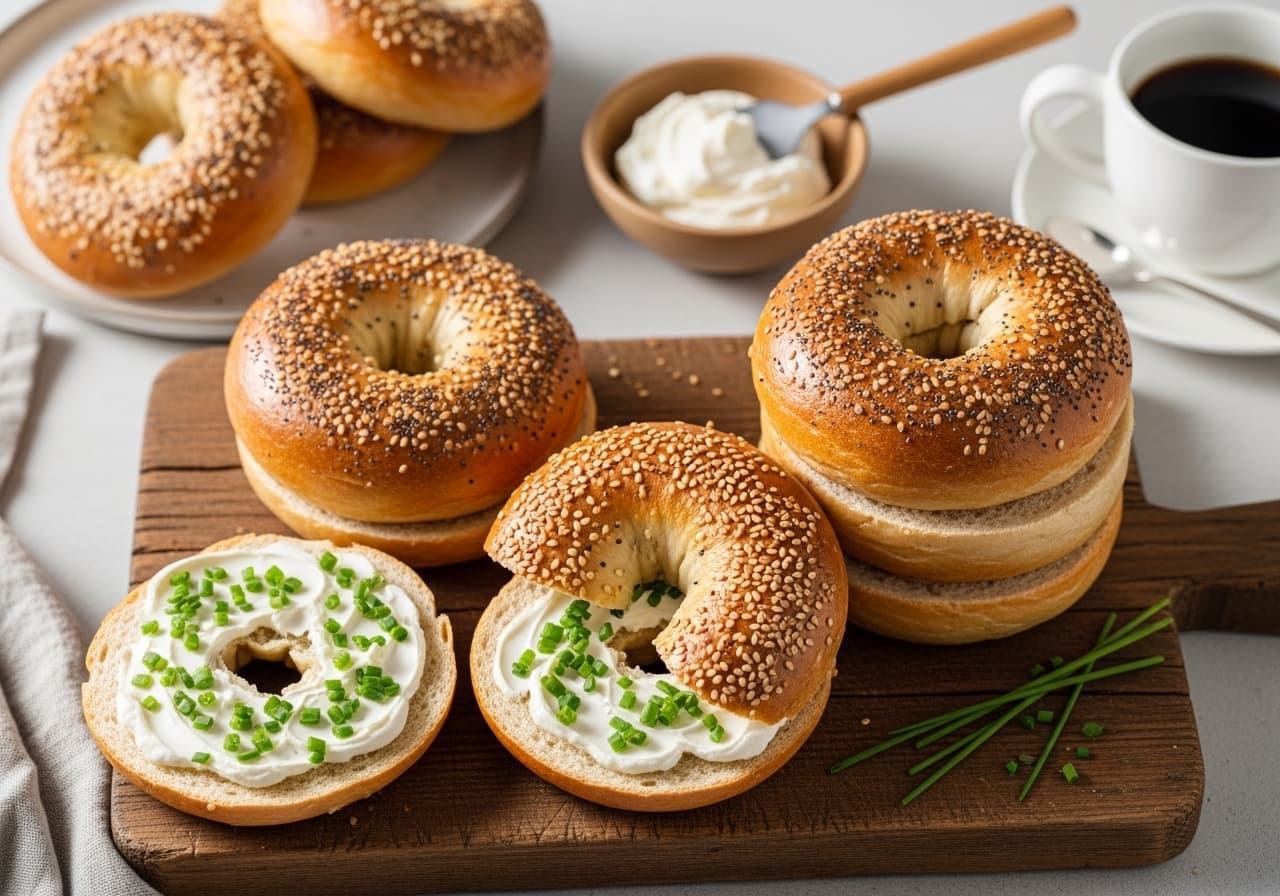
Classic Boiled and Baked Bagels
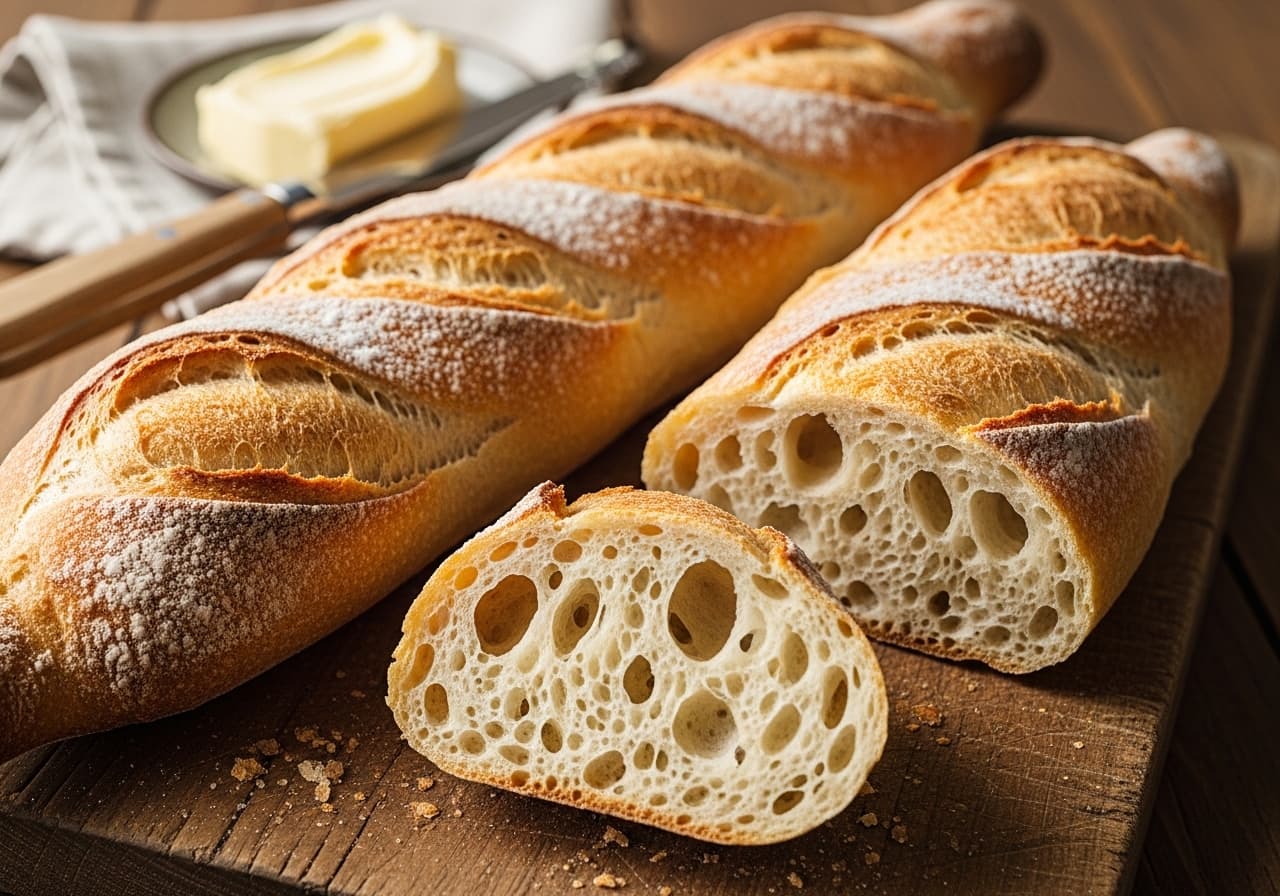
Authentic French Baguette Tradition
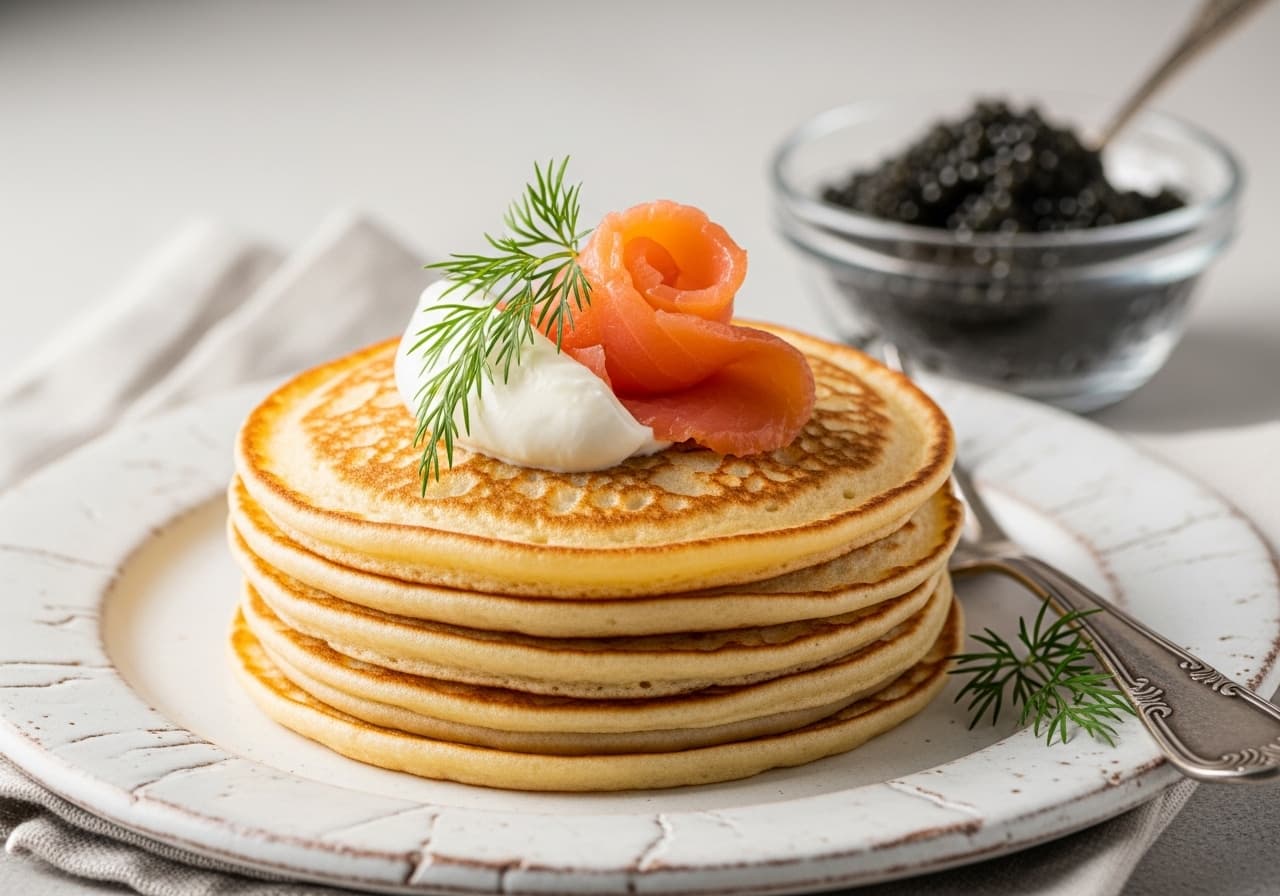
Classic French Blinis