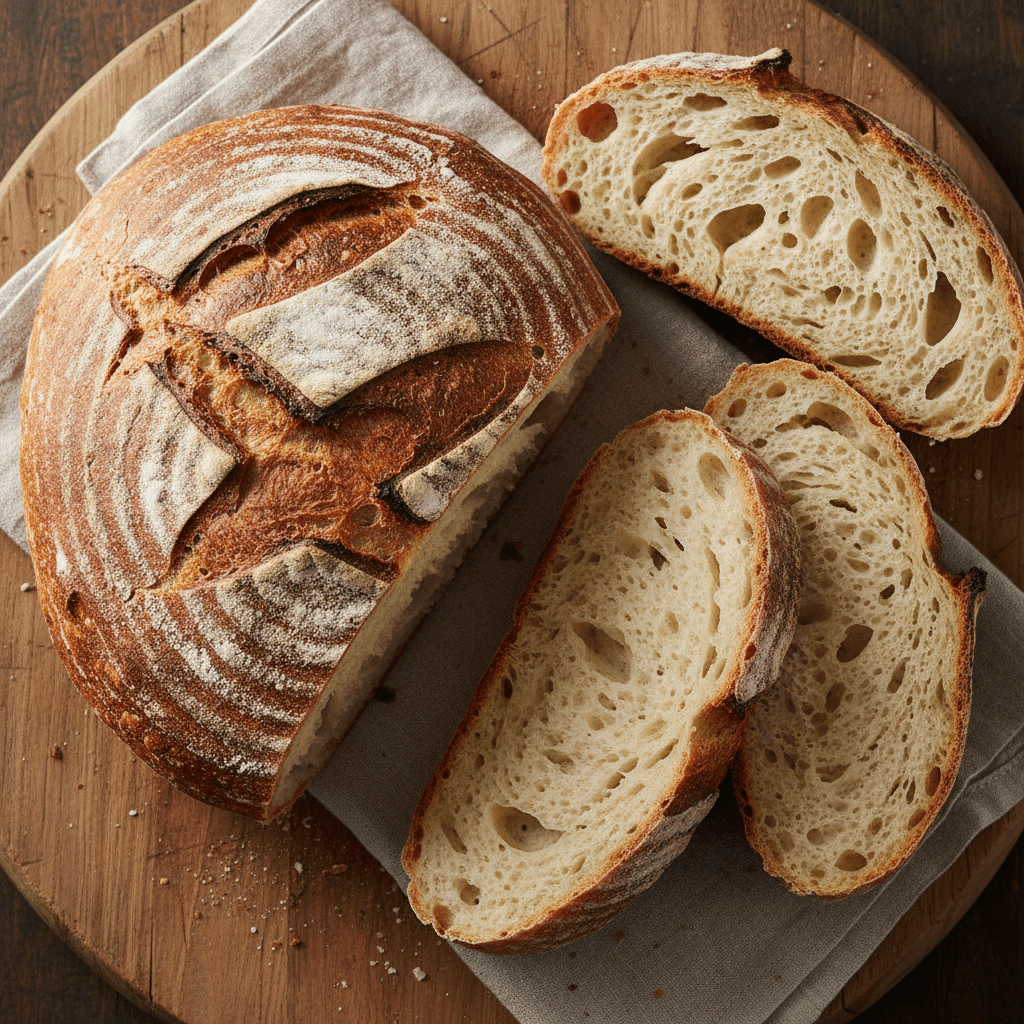
Pain de Campagne (French Country Bread)
Pain de Campagne, meaning 'country bread', is a quintessential French rustic loaf, celebrated for its robust flavor, thick, crackly crust, and open, chewy interior. Traditionally crafted with a blend of wheat and often rye flour, and leavened with a sourdough starter, it embodies the wholesome, artisanal baking traditions of the French countryside, perfect for accompanying meals or enjoying with cheese.
Ingredients
- 400 g Strong White Bread Flour
- 75 g Whole Wheat Flour
- 25 g Dark Rye Flour
- 375 ml Warm Water (30-35°C)
- 50 g Active Sourdough Starter (fed and bubbly)
- 2 g Instant Dry Yeast
- 10 g Fine Sea Salt
- 1 teaspoon Olive Oil (for greasing bowl)
- 2 tablespoons Rice Flour (for dusting banneton)
Instructions
- 1
Prepare the Dough: In a large mixing bowl, combine the strong white bread flour, whole wheat flour, and dark rye flour. Add the warm water, active sourdough starter, and instant dry yeast. Mix with a spoon or your hand until just combined and no dry spots of flour remain. Cover the bowl and let it rest for 30 minutes (autolyse).
- 2
Add Salt and Mix: After the autolyse, sprinkle the fine sea salt over the dough. Mix thoroughly for 5-7 minutes, kneading gently in the bowl or on a lightly floured surface, until the salt is fully incorporated and the dough starts to develop some elasticity.
- 3
Bulk Fermentation with Folds: Lightly grease a clean bowl with olive oil and transfer the dough to it. Cover and let it ferment at room temperature (20-24°C / 68-75°F) for 3 hours. During this time, perform 3-4 sets of 'stretch and fold' every 45 minutes: gently stretch a portion of the dough up and fold it over itself, rotating the bowl a quarter turn, repeating 4-5 times per set.
- 4
Pre-shape: After bulk fermentation, gently turn the dough out onto a lightly floured surface. Gently shape it into a loose round (boule) or oval (bâtard) and let it rest, uncovered, for 20 minutes to relax the gluten.
- 5
Final Shape and Proof: Lightly flour your banneton or a bowl lined with a floured cloth with rice flour. Shape the dough into its final boule or bâtard, creating tension on the surface. Place the shaped dough seam-side up into the prepared banneton.
- 6
Cold Proof: Cover the banneton with a plastic bag or shower cap and refrigerate for 8-12 hours (or up to 24 hours) for a slow, flavorful proof. Alternatively, proof at room temperature for 1-2 hours until visibly puffy but not over-proofed.
- 7
Preheat Oven: About 45-60 minutes before baking, place a Dutch oven with its lid into your oven and preheat to 230°C (450°F).
- 8
Score and Bake Covered: Carefully remove the hot Dutch oven from the oven. Gently invert the cold-proofed dough into the hot Dutch oven. Score the top of the dough with a sharp razor blade (lame) or knife. Place the lid back on and bake for 20 minutes.
- 9
Bake Uncovered: Remove the lid from the Dutch oven and continue baking for another 25-30 minutes, or until the crust is deeply golden brown and the internal temperature reaches 96-99°C (205-210°F).
- 10
Cool: Carefully remove the bread from the Dutch oven and transfer it to a wire rack to cool completely for at least 1-2 hours before slicing. This is crucial for the crumb to set and for optimal flavor.
Chef's Tips
- •For the best crust development, baking in a preheated Dutch oven is highly recommended as it traps steam, mimicking a professional baker's oven.
- •The amount of water absorbed by flour can vary; adjust slightly if your dough feels too wet or too dry, aiming for a shaggy but manageable consistency.
- •Do not skip the cooling step! Slicing hot bread can result in a gummy texture and incomplete flavor development.
- •Experiment with different ratios of whole wheat or rye flour for varied flavor profiles. A higher percentage will yield a denser crumb and tangier taste.
Recommended Equipment
As an Amazon Associate, we earn from qualifying purchases.
Reviews
Sign in to leave a review.
No reviews yet. Be the first!
More Breads & Pastries Recipes
Classic Boiled and Baked Bagels
Authentic French Baguette Tradition
Classic French Blinis